

The story of The Kate Breastplate
What Can Armour Made Of Glass Protect?
It’s a question I return to when I think about The Kate Breastplate.
Armour suggests strength, defence and the body’s need for protection. Glass suggests fragility, light and the possibility of breaking.
In this piece, those ideas meet.
The work began with an open call from the Glass Society of Ireland and CIFD for The Glass Runway. The theme I responded to was Equality: an invitation to explore glass as something wearable. At the centre of my project was a pre-made dress by Noema Damaris entitled The Kate Dress. My idea was to add a piece of Empathy Armour to it.
That is how The Kate Breastplate came about. The dress provided the starting point and its name; the glass breastplate itself - its design, making and meaning provided my me.
The Kate Breastplate
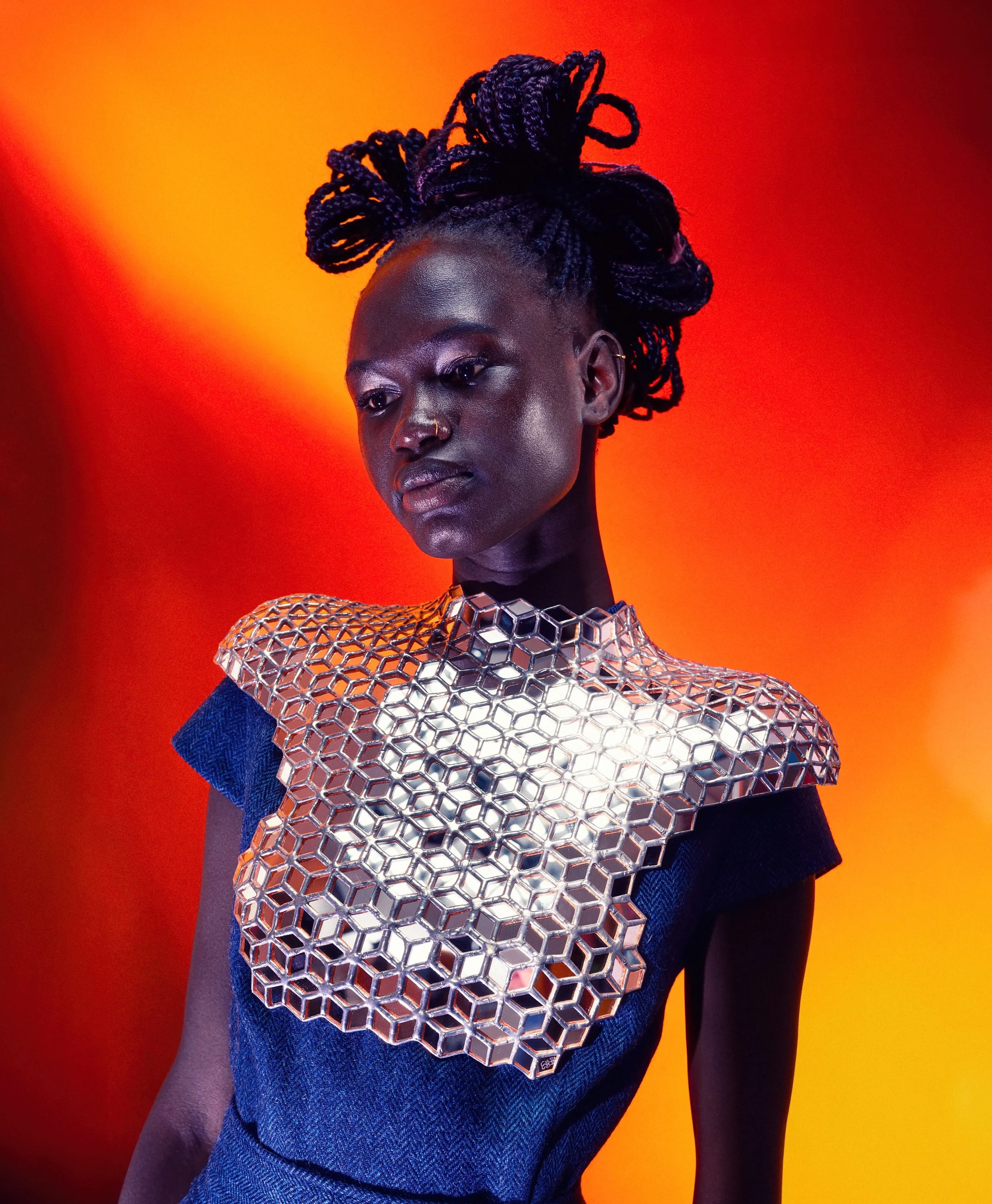
Empathy Armour - a sculptural glass breastplate exploring equality, vulnerability, protection and resilience.
I made the breastplate from glass and mirror using the Tiffany copper-foil technique…
Its reflective surface alludes to the tilted shape resembling a Donegal tweed herringbone pattern, bringing another texture and reference into the work.
The mirror reflects whoever stands before it, making the viewer part of the encounter. The image changes with the light, the angle and the person looking.
For me, that reflection connects with the questions behind Empathy Armour. Protection can mean keeping something out, but empathy asks us to remain open to another person’s experience. The breastplate holds these ideas together: a protective form made from material that lets light in - welcoming the viewer to treat the wearer with the same respect they would like to receive.
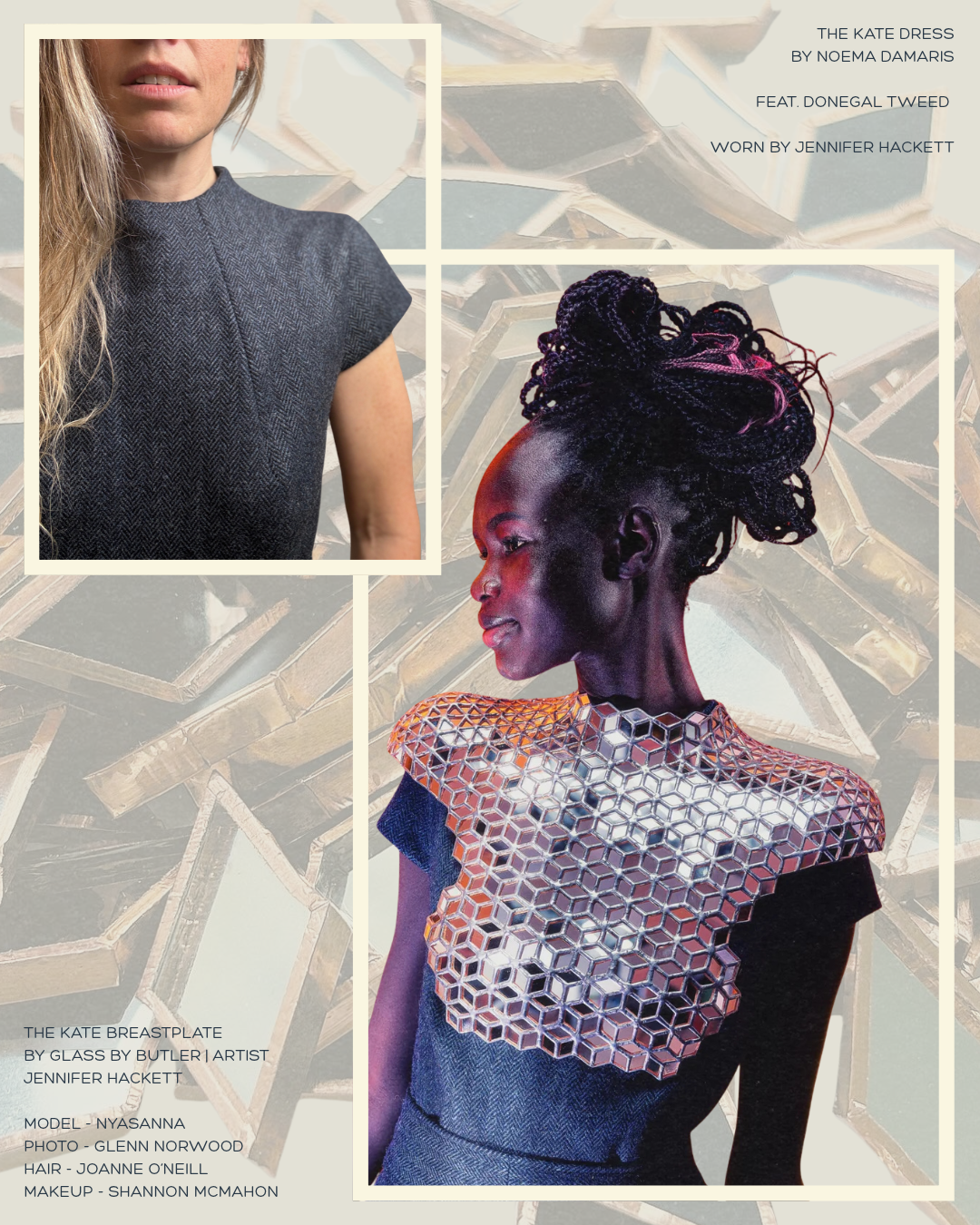
The pre-made Kate dress became the starting point for my glass breastplate in the Glass Runway.
The work’s journey brought it to Belfast, a place with deep personal meaning for me. I was born to an Irish mother from the Republic of Ireland and a Londoner father.
Each summer, we travelled through the barricades during the Troubles to visit family in Donegal.
Those visits were what I looked forward to most, but the journeys carried an enormous tension.
I was raised to understand the plight of Irish people living under occupation, and my father fully supported that understanding.
Ireland was part of our family life: our relatives, the road to Donegal, the barriers along the way, and the relief of arriving.
I also carry the memory of how close we came to being affected by the bombing on Market Street in Omagh in 1998. It was the road we took to our family in Donegal.
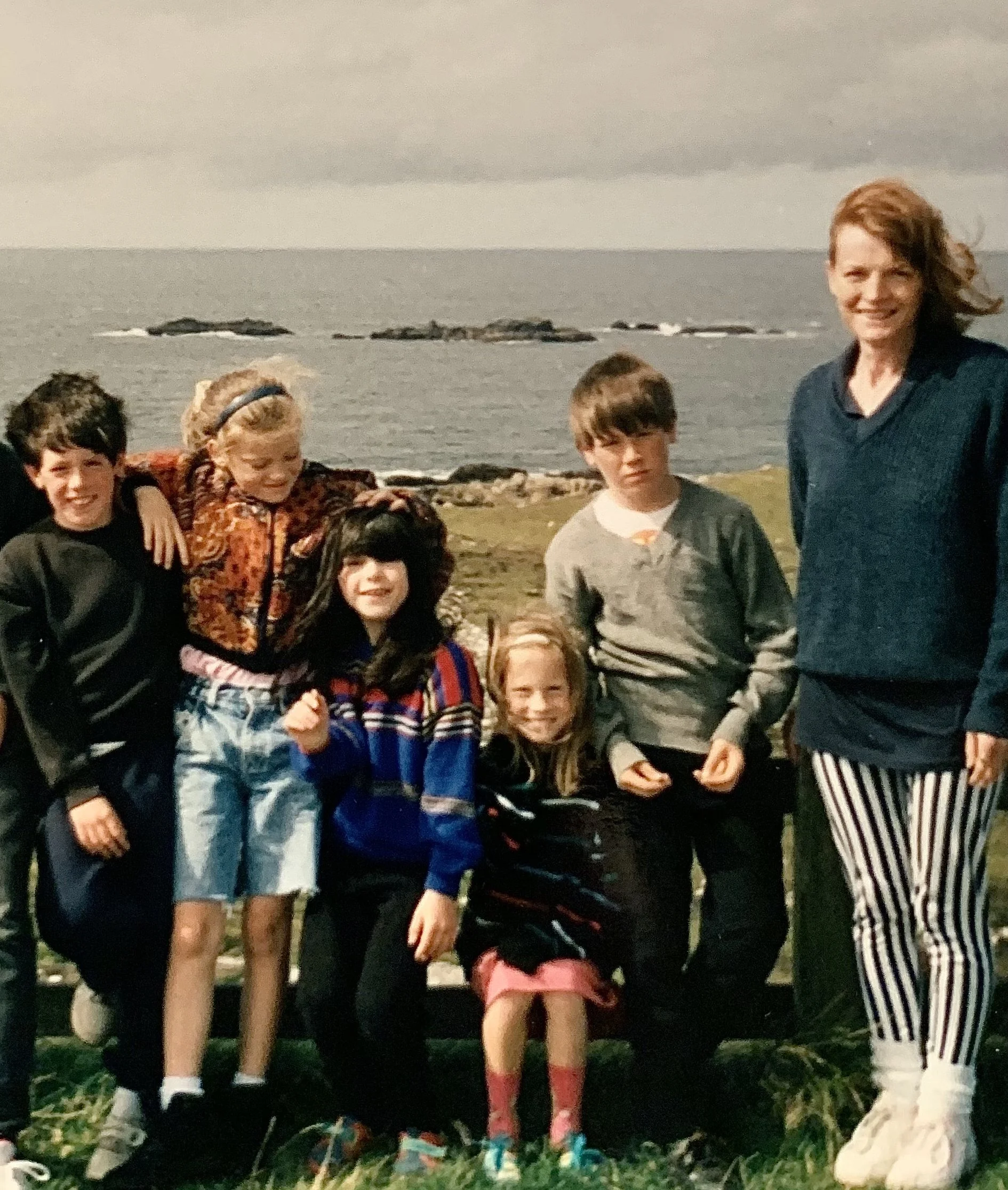
My mum Bríd Butler (née Carr) with my cousins and I in Fanad, Donegal.
My grandfather, District Justice John Carr, was born in Fanad and remained deeply attached to it. A fluent Irish speaker, he used the native language in court whenever he could.
Although his legal career took him to Dublin and the Midlands, he returned to Fanad regularly and hoped to settle there after retirement. He also helped reopen the Mevagh Boatyard at Downings, driven by a belief that the tradition of boatbuilding should not die. His son, my uncle Frank, managed the yard, which went on to launch vessels and provide employment in the area.
My grandfather’s commitment to Fanad and its future is part of what made the Irish cause so personal to me.
Memory and what we carry
This history is part of how I understand vulnerability, protection and resilience.
Glass Society of Ireland + CIFD ‘The Glass Runway’ - Live at The MAC, Belfast.
When I learned that The Kate Breastplate had entered the Ulster Museum’s permanent collection, I felt immense gratitude.
A work made slowly and by hand had found a lasting home in a public collection, where it can meet people whose stories I may never know.
The breastplate is included in Ashes to Fashion, an exhibition marking fifty years since a devastating fire at Malone House destroyed almost all of the Ulster Museum’s original fashion and textile collection. The exhibition tells a story of loss, rebuilding and the life of a collection created anew.
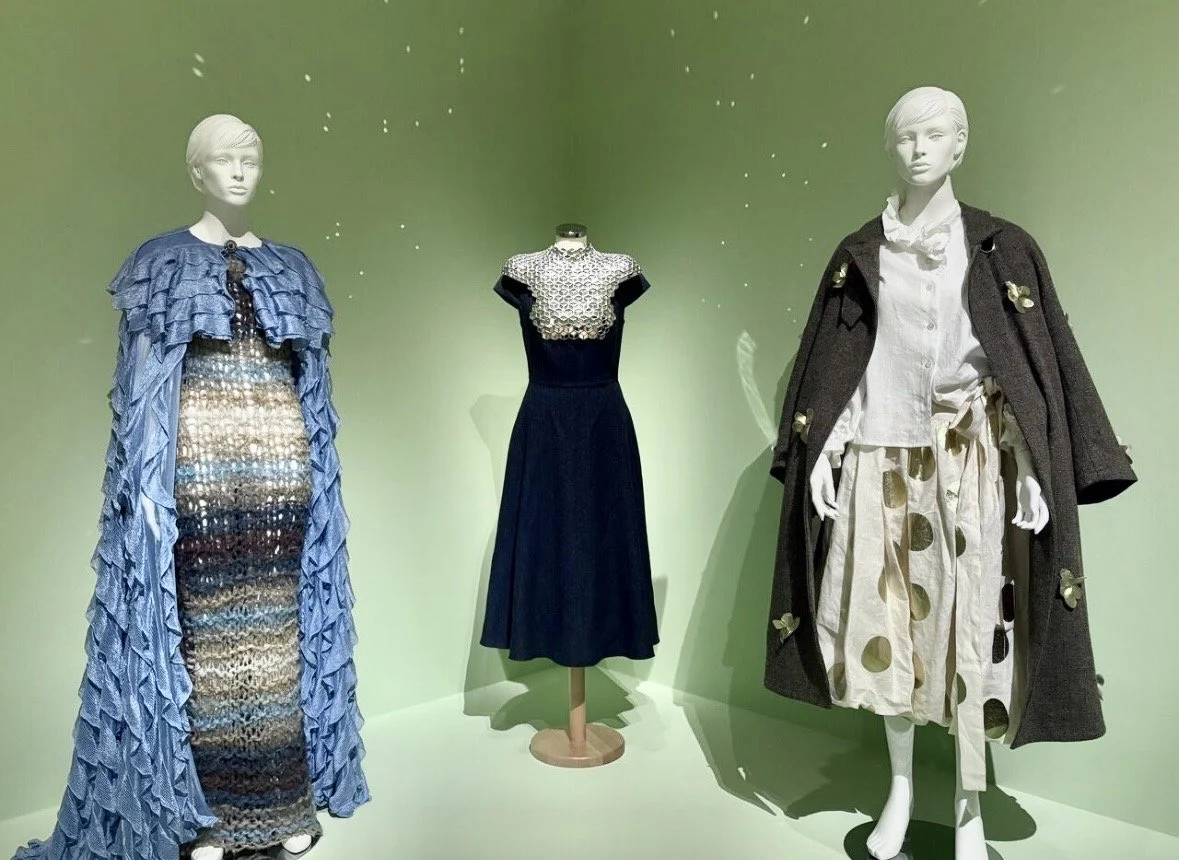
The Kate Breastplate (centre) on display at Ashes to Fashion, Ulster Museum.
Left: Oran Aurelio
Right: Kindred of Ireland
I feel a connection between that story and the journey of this work, while recognising that they are not the same story.
The Kate Breastplate began with an open call and an idea: to bring glass armour onto the body. It travelled through performance and exhibition before finding a permanent home in the museum.
Its place there gives it a future beyond my studio and invites others to make their own sense of it.
I think again about the mirror, and the changing image it holds. Perhaps the breastplate doesn’t answer the question of what armour can protect…
Perhaps it asks us to look more closely at what we carry, what we reveal and how we remain open to one another.
The Kate Breastplate is on view as part of Ashes to Fashion at the Ulster Museum until 3 January 2027.
Glass By Butler
Jennifer Hackett
Rome, Italy
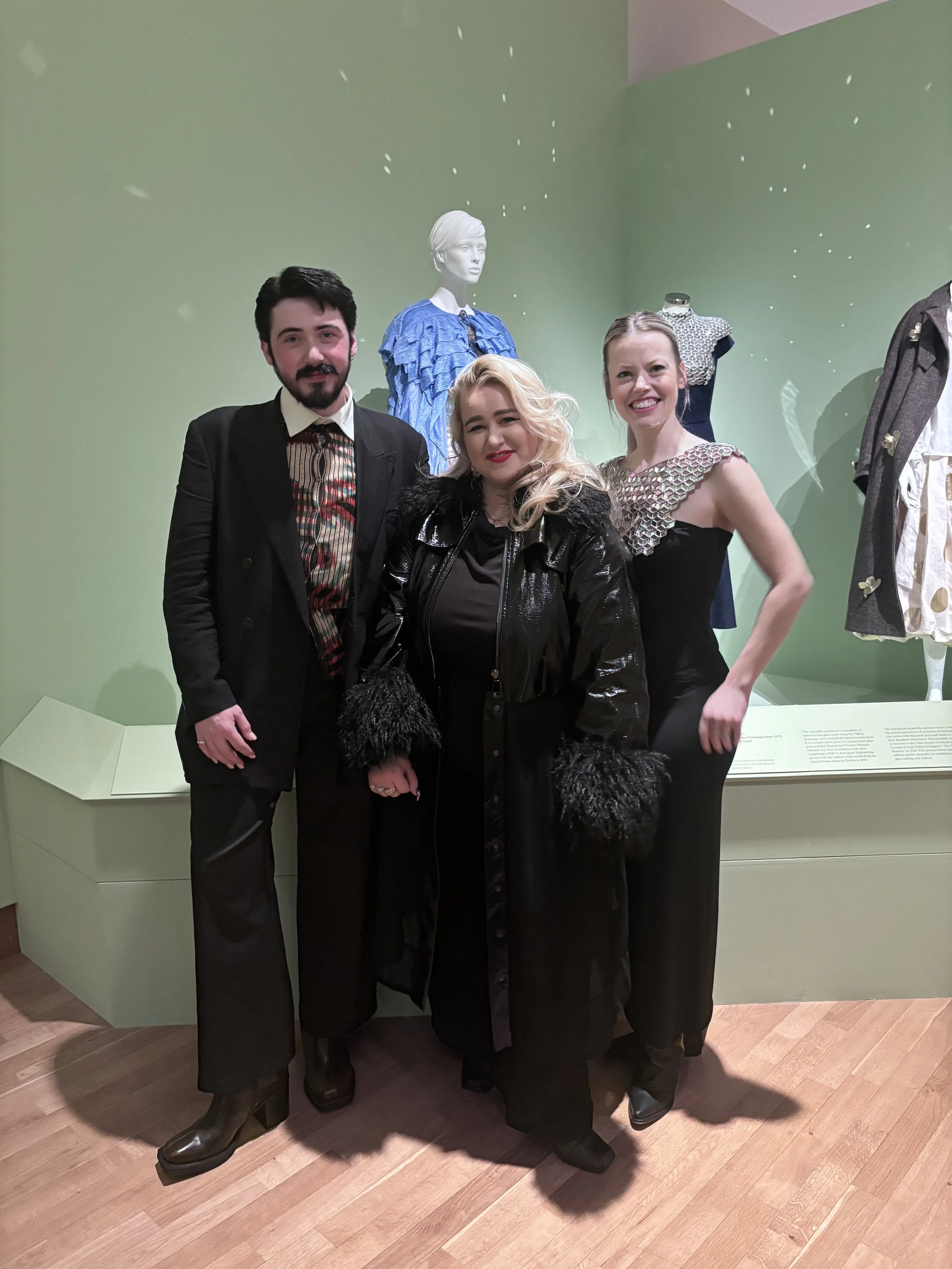
Oran Aurelio, Laura Fitzachary and Jennifer Hackett at the opening of Ashes to Fashion at Ulster Museum, Feb 2026
