

A New Chapter for Glass By Butler
From Empathy Armour to Growth, the work is moving into a new phase
Glass By Butler is a contemporary glass practice based in Rome, working primarily with the Tiffany technique to create sculptural and panel works exploring human experience, resilience, vulnerability and transformation.
Over the past few years the work has travelled considerably further than the little studio in which it is made - something I’m hugely proud of.
There have been exhibitions in Ireland, Italy, the UK and internationally; collaborations with fashion designers, artists and other creative practitioners; press coverage; and, most significantly, works entering institutional collections.
That has been a significant journey for a practice made by one person, in a little studio in Rome.
And now, I feel the work is beginning to move somewhere new.
From Empathy Armour to Growth
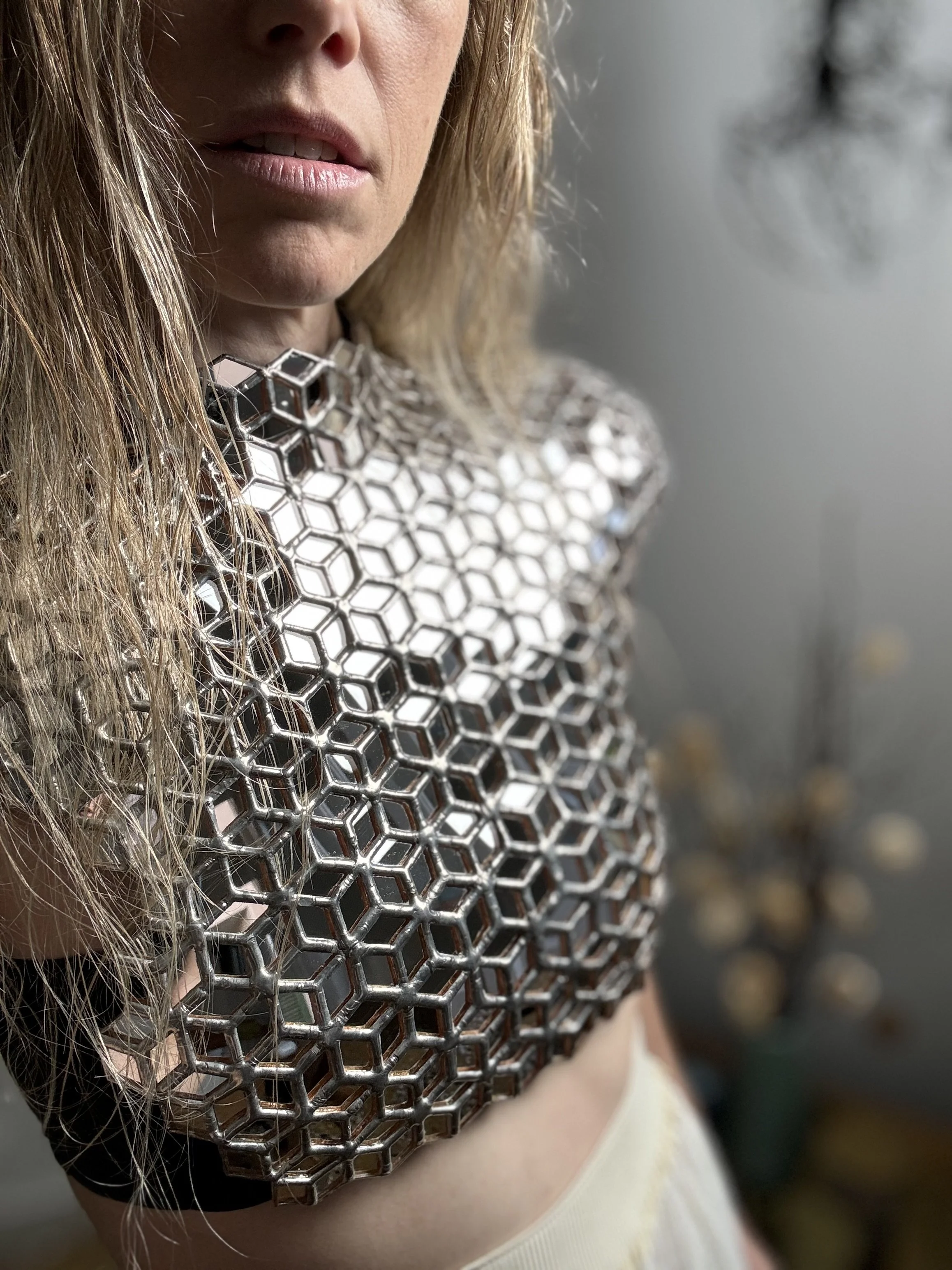
Empathy Armour - a sculptural glass breastplate exploring equality, vulnerability, protection and resilience.
One of the most recognisable bodies of work within Glass By Butler is Empathy Armour - sculptural glass armour created as a visual response to equality, vulnerability, protection and the complicated ways in which we move through the world.
I have always been interested in the contradiction at its heart: armour is designed to protect us, but what does it mean to build that protection from something as apparently fragile as glass?
The work developed through a collaboration between the Glass Society of Ireland and the Council of Irish Fashion Designers in the “Glass Runway” project, and has been presented in exhibitions and live-performance contexts.
It has also moved beyond the exhibition space.
The Kate Breastplate from the Empathy Armour series has been acquired by the Ulster Museum for its permanent collection and on exhibition within Ashes to Fashion, while another dragonfly piece, I’ve Got You, has entered the Irish State Collection.
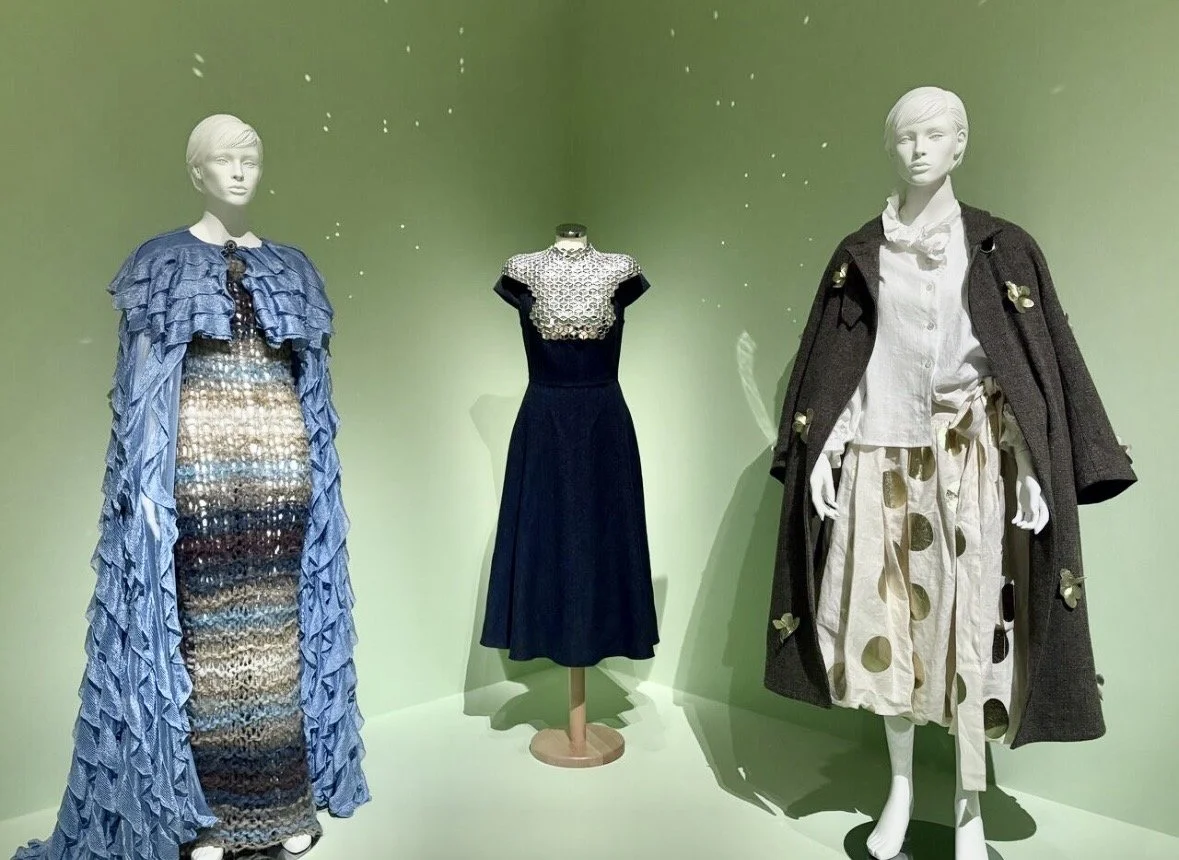
Empathy Armour on display at Ulster Museum as part of Ashes to Fashion.
Those acquisitions feel particularly meaningful to me.
The work began as a very personal exploration of human experience - of vulnerability, empathy and the ways we protect ourselves - and has now found a place within public collections where those ideas can continue to be encountered by other people.
But I don’t think the work is finished with Empathy Armour.
Increasingly, I am interested in what happens after protection.
What happens when we have survived something?
How do we adapt?
What do we carry with us?
And how do we begin to grow into something different?
Growth
Growth is part of this developing direction.
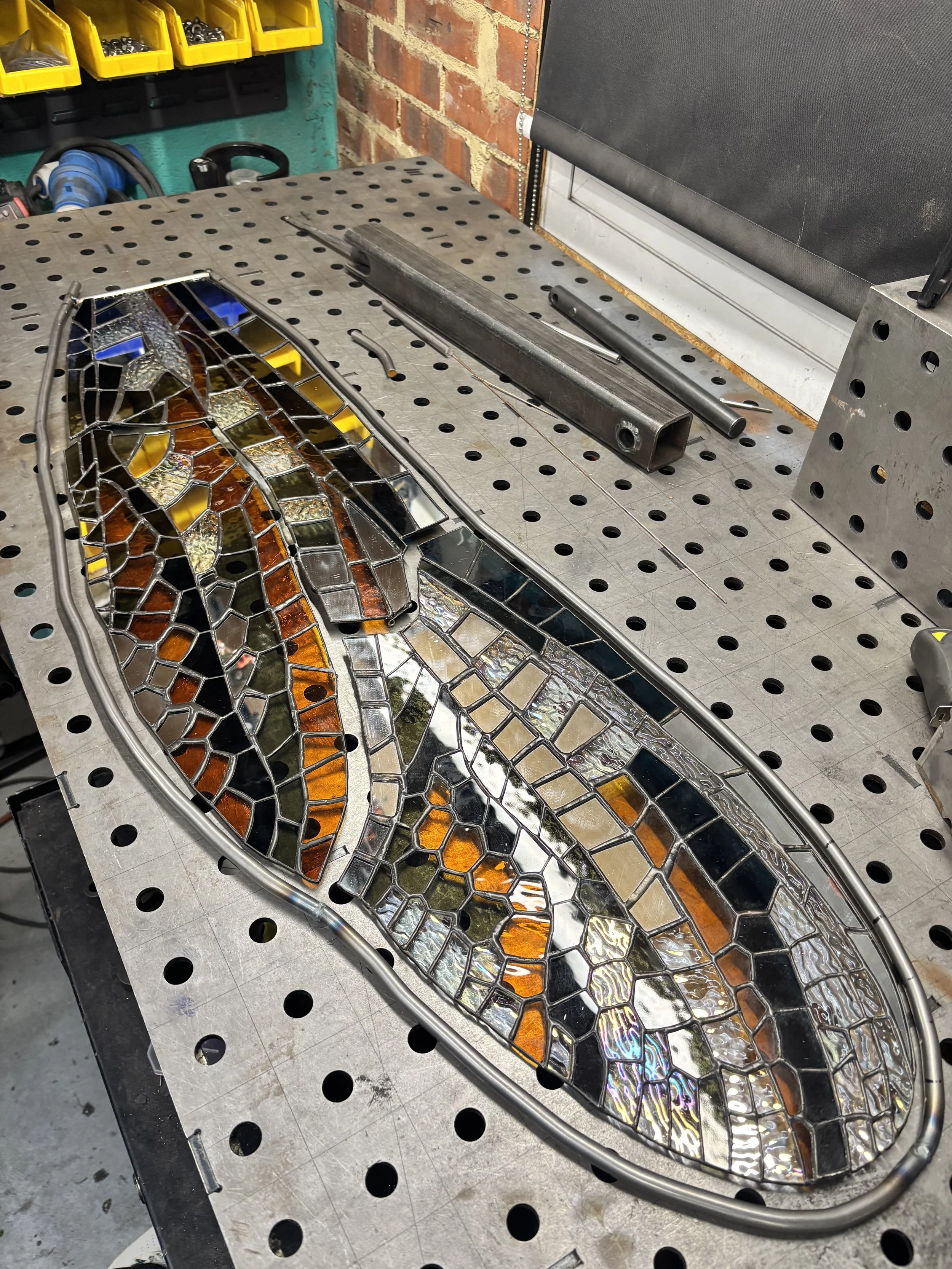
Growth - a work in progress, taking shape piece by piece.
The work explores the tension between being held and becoming free: the structures that support us, the things we carry with us, and the continual process of change.
A new mounting for the large wings I made during the Covid pandemic is currently being developed in collaboration with British maker James Smith. Bringing another material language into the piece is opening up new possibilities for how the glass can exist within a space.
That feels representative of where I want the work to go.
Glass remains at its centre, but it does not necessarily have to exist alone.
I am increasingly interested in what happens when glass is placed in dialogue with other materials, disciplines, bodies and ways of making.
The intention is not simply to make objects from glass.
It is to use the particular qualities of glass - its fragility, transparency, reflection, sharpness and ability to transform light - to explore ideas that are fundamentally human.
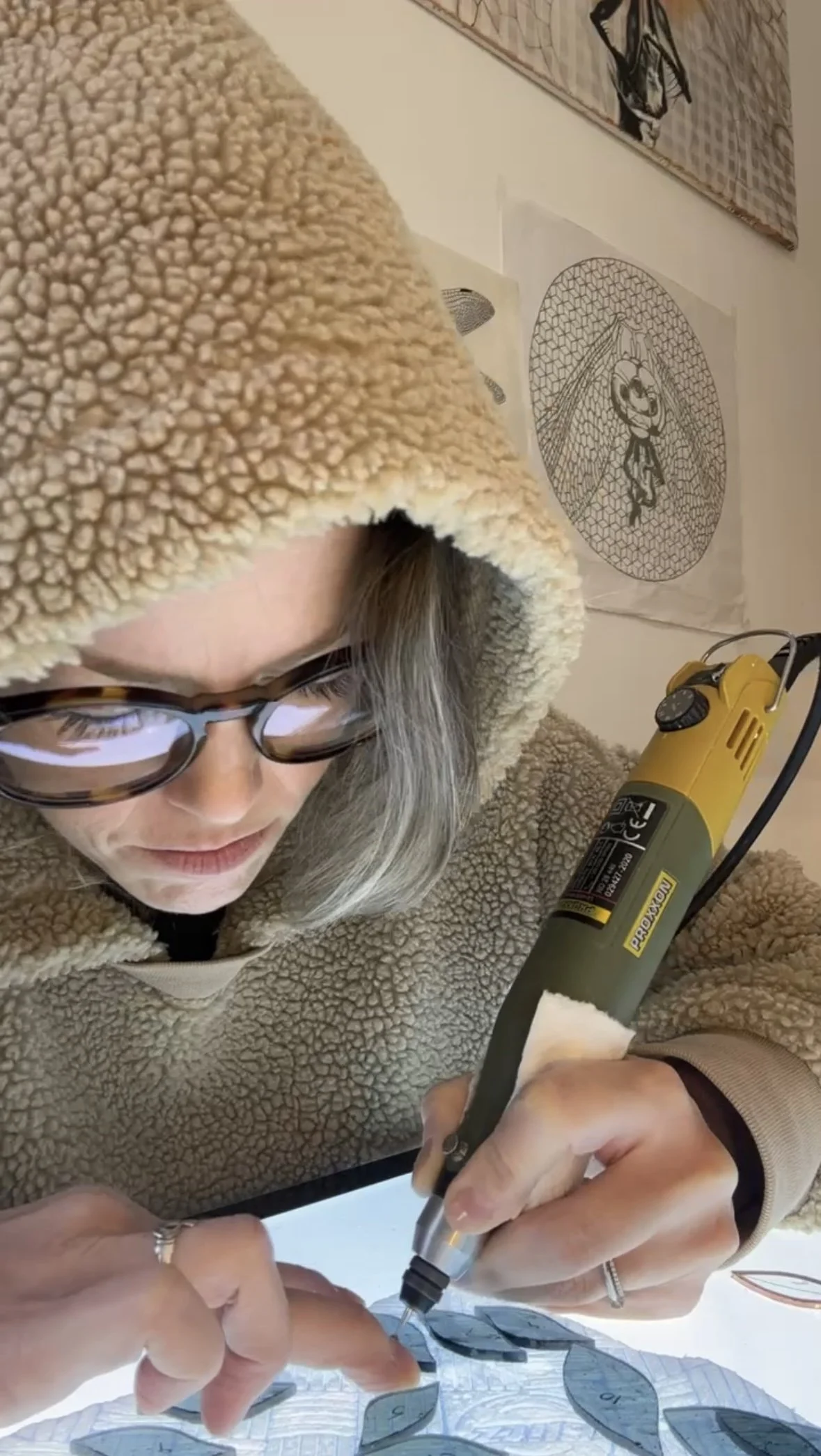
In the studio: shaping and detailing glass, one piece at a time.
A practice that moves between worlds
Although Glass By Butler is rooted in Rome, the work has developed through a distinctly international network.
Recent and past exhibitions and presentations include Of Sand & Ash at the National Design & Craft Gallery in Kilkenny; FENESTRA, presented online with Magnus Tempus 360 and through Artsy and Artnet; Ashes to Fashion at the Ulster Museum in Belfast; Connecting at the National Botanic Gardens in Dublin; and exhibitions and presentations with Craft NI, Glass Runway, BIOT International Glass Festival, Future Icons Selects during London Craft Week and the 18th Hangzhou Creative & Cultural Expo in China.
The work has also appeared in Rome in contexts ranging from Palazzo Odescalchi to Salotto 42, alongside collaborations with Roman fashion and creative practitioners.
Moving between art, fashion, design, craft and cultural spaces has become an important part of the identity of Glass By Butler.
The work is made slowly and by hand, using the traditional Tiffany / copper foil technique.
The technique is traditional. The ambition is contemporary.
I want the work to be able to sit comfortably within a museum, a gallery, a private collection, a fashion context or an architectural environment - while still feeling unmistakably like Glass By Butler.
Collaboration as a way of expanding the work
Collaboration has become another important part of this evolution.
Glass By Butler has previously worked with designers and artists including Ginevra Odescalchi and Noema James.
A new body of work is currently developing with London tattoo artist Rebecca Vincent, bringing her practice into dialogue with the glasswork and exploring the relationship between tattoo, body, ornament and permanent mark.
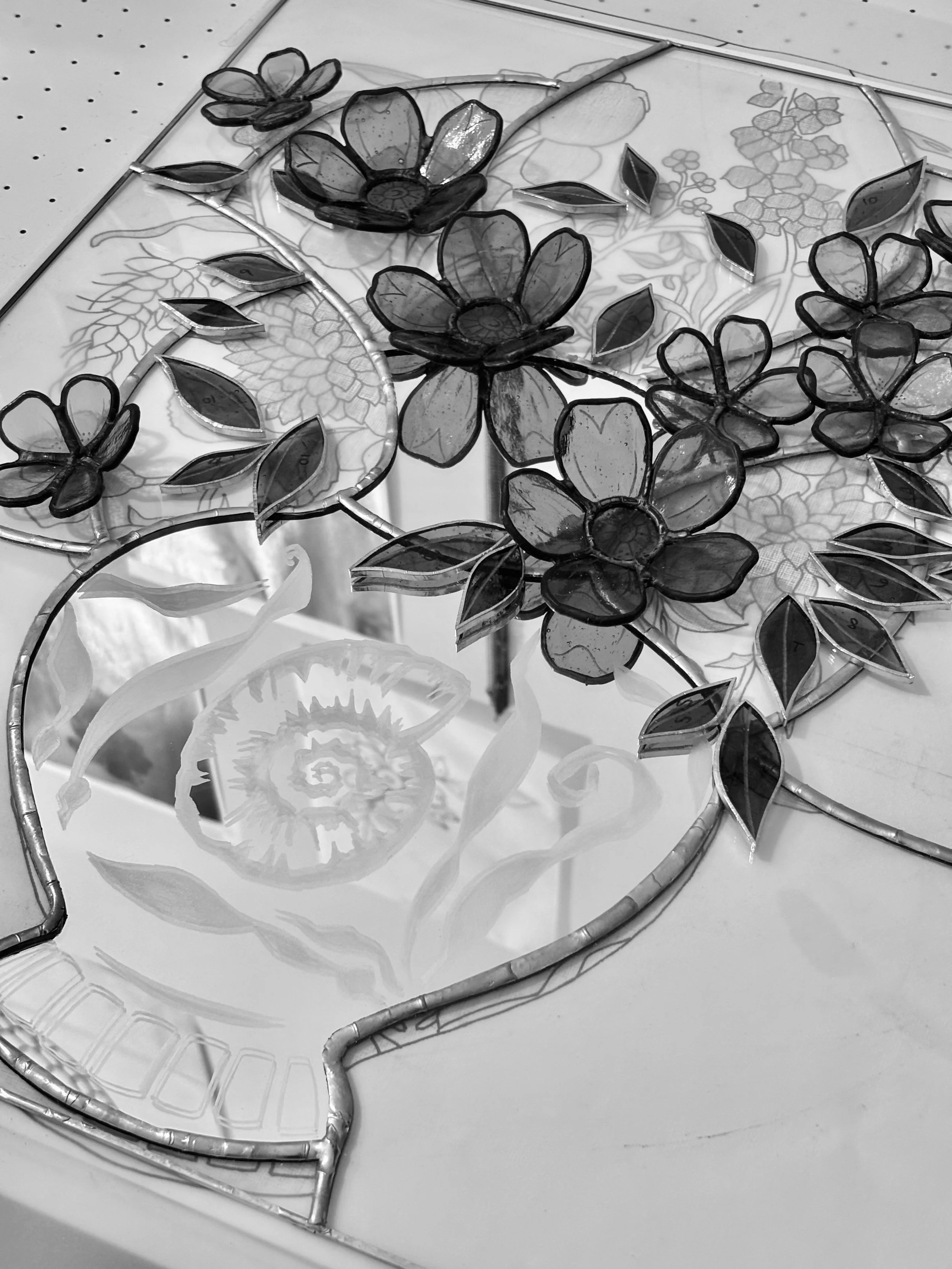
Detail from a collaborative work with tattoo artist Rebecca Vincent.
There are also conversations developing with fashion designers and other creative practitioners, alongside ideas for future exhibitions in Rome.
For me, these collaborations are not a departure from the glass practice.
They are a way of pushing it.
A way of asking what glass can become when it is allowed to move beyond the traditional panel or window - and what new ideas become possible when different disciplines meet.
Looking forward
The next stage for Glass By Butler is not about making the practice bigger simply for the sake of being bigger.
It is about making it more deliberate.
More ambitious work.
Stronger documentation.
More meaningful collaborations.
Exhibitions developed around ideas rather than simply opportunities to display finished pieces.
And a permanent digital home where the work can be properly seen, understood and collected.
The Glass By Butler website is becoming that home.
A place to see current work, explore the archive, understand the thinking behind individual pieces and follow the development of the practice beyond the fleeting nature of social media.
Instagram remains part of the conversation.
But it is not the destination.
The work itself is the centre.
From the early stained-glass pieces made in Rome to sculptural armour, museum acquisitions, international exhibitions and the new work now taking shape, the practice continues to ask a question that sits underneath much of what I make:
How can something fragile become a form of strength?
The answer keeps changing.
And that is where the next chapter begins.
Glass By Butler
Jennifer Hackett
Rome, Italy
